Radiofrequency (RF) microneedling has become one of the most popular cosmetic treatments in recent years. It promises smoother skin, tighter pores, reduced wrinkles and scars — all without traditional surgery.But in 2024–2025, the U.S. Food and Drug Administration (FDA) issued new warnings after receiving reports of serious injuries, including facial burns, scarring, nerve damage, and …

Radiofrequency (RF) microneedling has become one of the most popular cosmetic treatments in recent years. It promises smoother skin, tighter pores, reduced wrinkles and scars — all without traditional surgery.
But in 2024–2025, the U.S. Food and Drug Administration (FDA) issued new warnings after receiving reports of serious injuries, including facial burns, scarring, nerve damage, and unexpected cosmetic deformities.
Although RF microneedling can be effective in the right hands, it is not a harmless spa treatment. This procedure uses needles that penetrate the skin and deliver controlled heat (radiofrequency energy) to the deeper layers. When the depth is wrong — even by a small amount — complications can be significant and permanent.
This article explains how the treatment works, why precise needle depth cannot be guaranteed, what factors increase risk, and why the FDA is stepping in now.
What Exactly Is RF Microneedling?
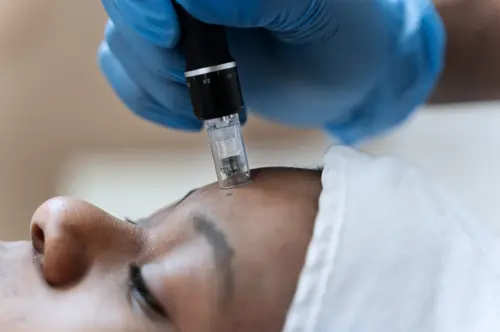
RF microneedling devices such as Morpheus8, Vivace, Secret RF, Agnes, and others combine:
Microneedles (usually 0.5–4.0 mm long)
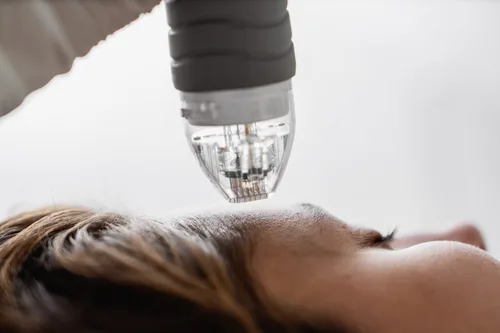
Radiofrequency heat, delivered through those needles
Multiple passes across the face or body
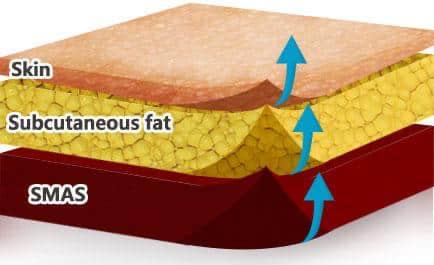
The goal is to create micro-injuries and heat the deeper dermis to stimulate collagen.
But this combination of deep penetration + thermal energy is exactly why things can go wrong.
Why Can RF Microneedling Cause Serious Side Effects?
- The Needle Depth Is Not Truly “Fixed” — Despite What Machines Claim
Manufacturers advertise precise, programmable needle depth (e.g., 2.0 mm exactly).
But in real-world skin, the actual depth varies because:
- Skin thickness varies person to person
Eyelids: ~0.5 mm
Cheeks: 1.5–2.0 mm
Jawline: up to 3.0–4.0 mm
RF devices often do not adjust automatically for these variations.
- Even on the same face, skin thickness changes
Over bony areas (forehead, chin) → thinner
Over fatty areas (cheeks) → thicker
With age, weight loss, or prior cosmetic procedures
A fixed setting cannot accurately account for these changes.
Operator Pressure Changes the True Needle Depth
Even if the operator chooses “2.0 mm” on the screen, the actual penetration depends on how hard they press:
Too much pressure → the needle goes deeper than intended
Too little pressure → the needle barely enters the skin, causing uneven treatment
Dragging or pivoting the handpiece → creates irregular needle tracks
This operator-dependent variability is one of the main reasons injuries occur.RF Energy Strength Is Affected by Skin Impedance — Not Constant
Skin conducts electricity differently in:
oily vs. dry areas
scarred vs. normal skin
thin vs. thick skin
darker vs. lighter skin
Higher impedance means unexpected heat buildup, which increases risk of:
burns
hyperpigmentation
subdermal fat necrosis
nerve irritation
- Devices Differ Greatly in Quality and Calibration
The cosmetic industry is poorly regulated in many countries.
Some devices:
deliver inconsistent energy
have poor needle alignment
heat unevenly across the needle array
lack proper maintenance or calibration
The FDA warning specifically noted injuries related to off-brand and non-approved devices
- Areas Close to Nerves and Fat Pads Are High-Risk
RF microneedling can unintentionally damage:
superficial nerves, leading to numbness or neuropathic pain
fat pads, causing hollowing and premature aging
sebaceous glands, causing chronic dryness
hair follicles, causing patchy hair loss on the face
The danger is highest in:
forehead
around the eyes
nasolabial folds
jawline
temples
These areas have critical neurovascular structures very close to the skin.
FDA Warning:
What Triggered It?
The FDA received increasing reports of:
second- and third-degree burns
hyperpigmentation
persistent swelling
permanent track marks or grid scarring
fat loss causing facial hollowness
excessive pain or nerve injury
infections
eye injuries with peri-orbital use
Several patients required:
reconstructive surgery
steroid injections
long-term dermatological treatment
The FDA emphasized that:
RF microneedling devices are NOT approved for home use or non-medical operators.
Complications have occurred even in clinics when depth and energy settings were incorrectly used.
Why Precise Depth Cannot Be Guaranteed — Even by Qualified Operators
Here are the combined variables that make depth unpredictable:
Variable
Effect on Depth
Skin thickness differences
Depth varies by location
Age-related thinning
Deeper than intended penetration
Prior filler / fat loss
” Read More ; How Donor Allogeneic Fat Transfer Is Changing the Game in Facial Rejuvenation
Less resistance → deeper penetration
Operator pressure
Direct increase/decrease in real depth
Skin hydration
Changes mechanical resistance
Scarred or lasered skin
Lower impedance → unpredictable heating
Device calibration
Can overshoot set depth
Even with training, no operator can perfectly control all these variables.
Most Common Serious Complications
- Burns (thermal or electrical)
Due to unexpected energy concentration or deep penetration.
- Scarring
Grid-like patterns, linear tracks, or deep fibrotic scars.
- Hyperpigmentation or hypopigmentation
Especially in darker skin types (Fitzpatrick IV–VI).
- Fat atrophy
One of the most devastating complications → facial hollowing and aging.
- Neuropathic pain or numbness
From unintended contact with superficial sensory nerves.
- Infection
Especially in patients with acne, rosacea, eczema, or compromised skin barrier.
- Eye injuries
From peri-orbital use, even when the needle does not obviously penetrate deeply.
So Should the Public Avoid RF Microneedling Completely?
Not necessarily — but caution is absolutely necessary.
RF microneedling can be safe when:
performed by a properly trained doctor or registered nurse
using FDA-cleared devices
with conservative settings
and patient-specific planning
But the assumption that it is “just a collagen treatment” is dangerously misleading.
How Patients Can Protect Themselves
✔ Ask who is performing the treatment
It should be a medical professional, not a beauty therapist.
✔ Check the device brand
Ensure it is FDA-cleared, not a knock-off.
✔ Avoid treatment if you have:
active acne
recent sunburn
recent filler in the area
autoimmune conditions affecting skin
unrealistic expectations
✔ Be cautious with high-risk areas
Around the eyes, forehead, nose, temples.
✔ Start with conservative depth and energy
If the practitioner suggests very deep passes (3–4 mm) → seek a second opinion.
Final Thoughts
RF microneedling can deliver excellent results — but it is not a routine salon procedure.
The real-world variability in needle depth, heat distribution, and operator technique means that complications can and do occur, even with “premium” devices.
The FDA’s warning serves as a reminder:
When you combine needles + heat + human variability, precision is never guaranteed.
And when precision fails, the consequences can be permanent.
Patients should evaluate their practitioners carefully, ask questions, and make informed decisions.
Book a Consultation
It’s easy and free!