Notalgia Paraesthetica pilot study found that simple exercises and stretches relieved symptoms of Notalgia Paraesthetica in over 90% of patients, offering a safe and effective non-drug treatment option.**

Notalgia Paraesthetica : A Pilot Study of Treatment with Simple Exercises and Stretches
Dr. Alireza Fallahi, 2015, The Australasian Journal of Dermatology
Abstract
Notalgia Paraesthetica (NP) is a chronic sensory neuropathy that causes itching, burning, or tingling along the upper back, especially near the shoulder blades. Traditional treatments such as topical creams, medications, or injections often bring little relief and may cause side effects. In a 2015 pilot study by Dr. Alireza Fallahi and colleagues, a simple 12-week exercise program was tested on 12 patients suffering from NP. The results were promising—over 90% of participants experienced noticeable relief without any side effects. This approach may offer a safe, accessible, and low-cost alternative for managing this persistent condition.
Introduction
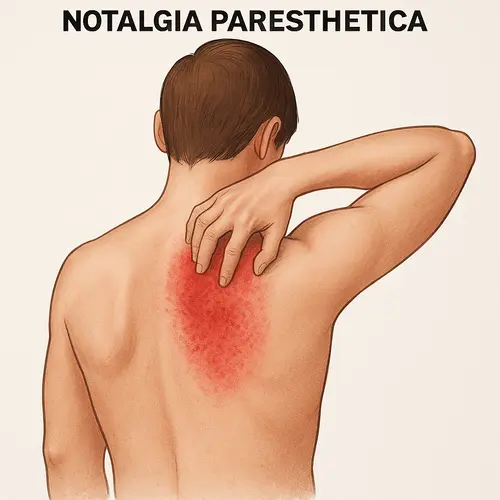
If you’ve ever experienced an unexplained, chronic itch between your shoulder blades that just won’t go away, you might be dealing with Notalgia Paraesthetica (NP). Despite appearing like a skin issue, NP is actually a nerve-related condition. It happens when the sensory nerves in the upper thoracic spine (T2–T6) become irritated or compressed.
People with NP often describe sensations such as itching, burning, or pins and needles. Sometimes, the constant scratching leads to dark or discolored patches of skin. Because standard dermatological treatments target the skin rather than the nerves, they usually fail to provide lasting relief.
Recognizing this problem, Dr. Fallahi and his team explored whether simple exercises and stretches could help by targeting the muscular and nerve compression aspects of the condition.
Causes and Symptoms of Notalgia Paraesthetica
The exact cause of NP isn’t fully understood, but most researchers believe it’s linked to nerve entrapment in the upper back. Poor posture, spinal degeneration, and tight paraspinal muscles can all contribute to nerve irritation.
Symptoms include:
- Persistent or intermittent itching between the shoulder blades
- Burning or tingling sensations
- Mild numbness or heightened sensitivity
- Discoloration of the skin from scratching
These symptoms can be frustrating and affect sleep, concentration, and quality of life.
Methods of the Pilot Study
In the 2015 pilot study, twelve patients diagnosed with Notalgia Paraesthetica took part in a 12-week exercise and stretching program. The routine was designed to:
- Relax the paraspinal and shoulder muscles,
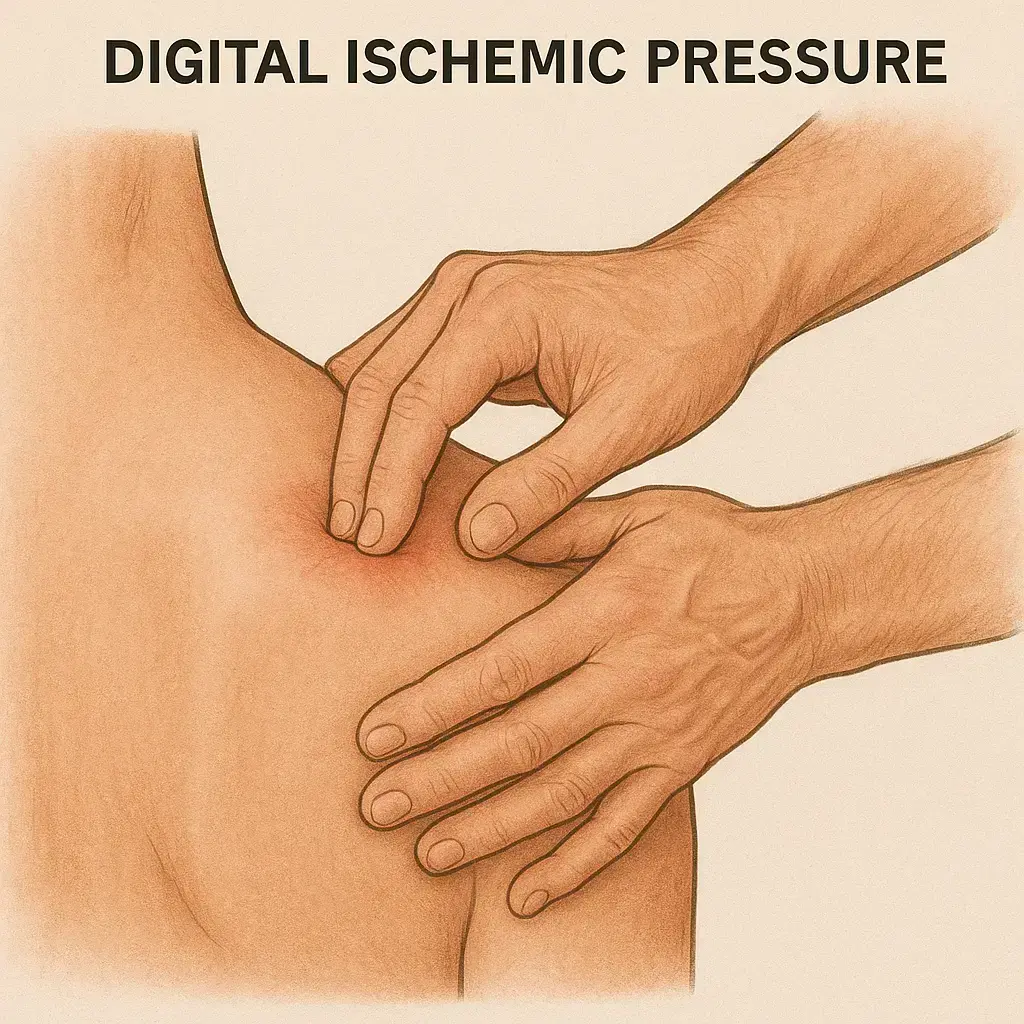
- Weekly digital ischaemic pressure applied to the area
- Improve posture and spinal flexibility, and
- Reduce nerve compression in the thoracic region.
Patients were instructed to perform these exercises daily. Although there was no control group or blinding (because it was an early exploratory study), the results were closely monitored.
Results of the Study
After twelve weeks of consistent stretching and strengthening exercises, eleven out of twelve participants (91.7%) reported a significant reduction in itching and discomfort. None of the participants experienced any negative side effects.
While the study’s small sample size limits broader conclusions, these outcomes indicate that exercise therapy could be a valuable treatment option for many people living with NP.
Why Exercise Helps in Notalgia Paraesthetica
The findings support the theory that NP is not purely a skin problem—it’s closely related to muscle tension and nerve pressure. When the muscles surrounding the spine are tight, they can compress the small nerves branching from the spinal cord.
Regular stretching and strengthening exercises help by:
- Releasing muscle tension and improving blood flow.
- Enhancing nerve mobility, which may reduce irritation.
- Improving posture, especially for people who spend long hours sitting at desks or computers.
- Reducing recurrence by strengthening supportive back muscles.
In short, exercise doesn’t just manage the itch—it targets one of the root causes of the condition.
Advantages of Exercise-Based Treatment
Compared to medications or injections, exercise therapy offers several advantages:
- 💸 Low cost: No prescription or expensive devices required.
- 🧘♀️ Safe and natural: No side effects reported.
- 🏠 Accessible: Can be performed at home with minimal guidance.
- 🧠 Empowering: Encourages patients to take an active role in their recovery.
This approach aligns with modern holistic medicine, which emphasizes self-care, body awareness, and long-term wellness rather than short-term symptom control.
Limitations and Future Research
Although the results are encouraging, this was a small, open-label pilot study without a control group. Future studies should include:
- Larger sample sizes and randomization,
- Detailed descriptions of the exact exercise routine,
- Long-term follow-ups to determine whether improvements last,
- Comparisons with medication-based treatments.
Researchers could also use imaging tools to study how spinal changes or muscle relaxation affect nerve compression in NP patients.
Learn more : Dr. Nima Ghadimi, Internal Medicine Specialist
Conclusion
The pilot study by Dr. Alireza Fallahi and colleagues presents an optimistic outlook for people living with Notalgia Paraesthetica. A simple, consistent exercise program helped nearly all participants experience meaningful relief from chronic itching—without drugs, injections, or side effects.
While more research is needed, this approach offers a safe, inexpensive, and accessible way to manage NP symptoms and potentially improve quality of life. For many patients, daily stretching and back exercises could become a practical first step toward lasting comfort.
Book a Consultation
It’s easy and free!